Peugeot P10
1982
Bike History
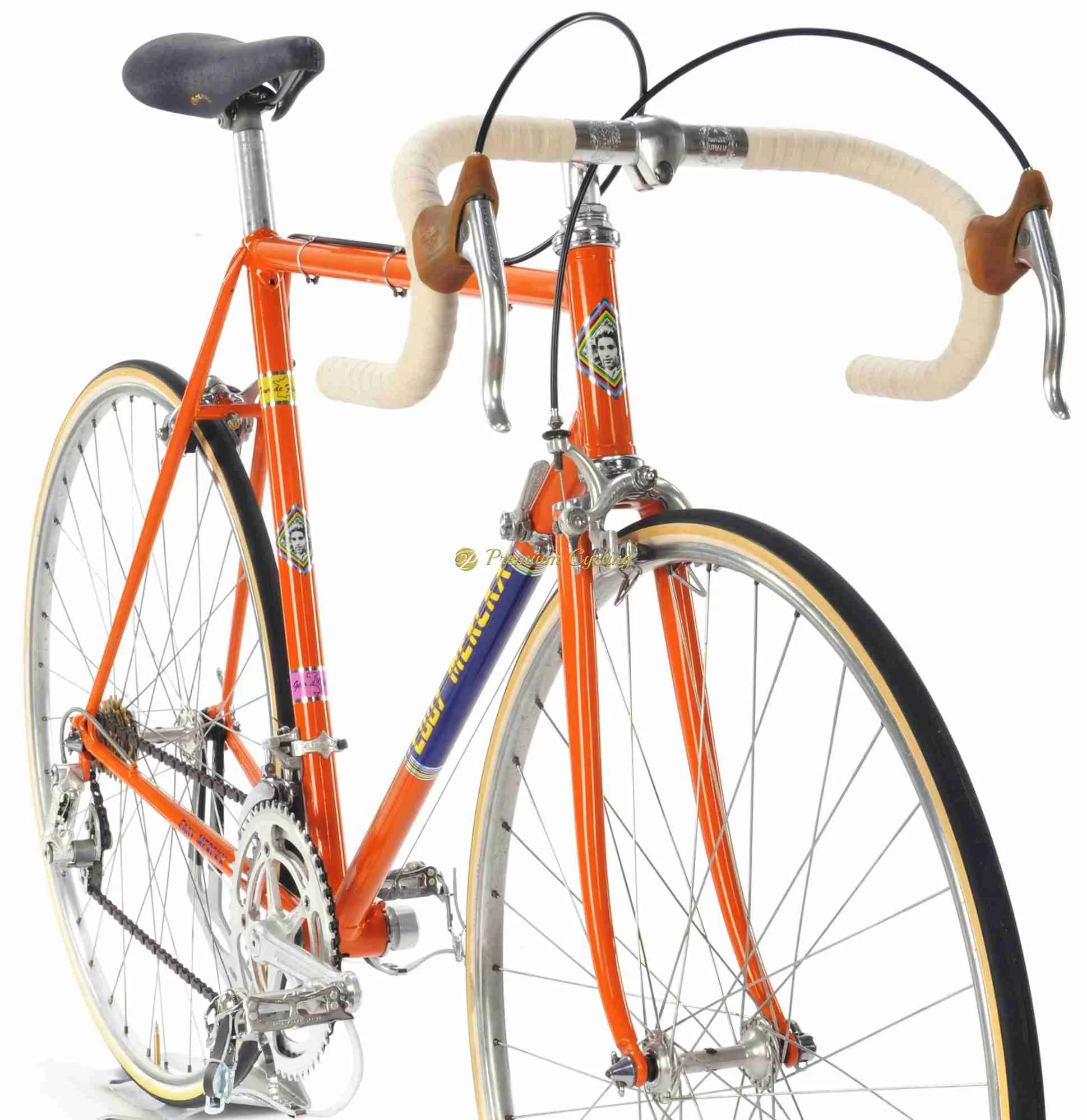
One of the best lugged steel bikes Peugeot ever made.
Peugeot started its bicycle production in the late 19th century. But it was not until they started to sponsor professional riders, that their sports bikes grew massively famous. 10 Tour de France victories, countless championships and other races have been won on bikes with the Lion emblem.
In the second half of the 20th century, pictures of riders like Rudi Altig, Eddy Merckx, Tom Simpson or Bernard Thévenet smashing it on Peugeot bikes became iconic. First the professional level bike was the model PX10 which later was developed into the PY10. But there was something even better:
In the late 1970s Peugeot offered its absolutely best bike to the solvent customer. In the Ateliers Prestige Peugeot, away from the ordinary production, they brazed the Peugeot PRO10, which used, in fact, exactly the same frameset which was made for the professional team. These frames were built to order in very small numbers, thus they were open to a wide variety of customisation.
Not only could you choose a custom geometry, but also tubing and parts. As tubing there was a choice of Reynolds 531, 753 or 531SL.
This frameset is made from Reynolds 531 throughout. The componentry consists of a compilation of fine parts, mostly Spidel.
🇫🇷 The 1982 Peugeot Professional Cycling Team
The 1982 Peugeot cycling team represented one of the last chapters in the long and storied history of one of professional cycling’s most iconic squads. Backed by the French automotive giant Peugeot, the team traced its lineage to the early 20th century and was known for a strong tradition of nurturing French talent and promoting clean, elegant riding style. By 1982, the team was officially named Peugeot–Shell–Michelin, with co-sponsors Shell and Michelin reflecting its deep roots in French industry and sport.
Led by respected directeur sportif Maurice De Muer, the team fielded a roster of reliable stage racers, aggressive breakaway specialists, and skilled climbers. Riders like Pascal Simon, Jean-René Bernaudeau, and Philippe Chevallierhelped carry the Peugeot banner through the grand tours and French classics. Pascal Simon, in particular, would go on to wear the yellow jersey in the 1983 Tour de France, underlining the team’s depth and potential.
The 1982 Peugeot team bikes were built around Reynolds 531 steel tubing with distinctive black-and-white checkerboard livery—a look that became synonymous with French racing class. These bikes were equipped with French componentry from companies like Simplex, Stronglight, and Mafac, though by the early 1980s, many riders were switching to more reliable Japanese or Italian components for improved performance.
While 1982 didn’t yield major grand tour victories, the Peugeot team remained a respected presence in the peloton, admired for its legacy, consistency, and distinctly French identity. It was also a pivotal year before Peugeot would eventually withdraw from pro cycling sponsorship in the mid-1980s, marking the end of one of the sport’s most enduring and recognisable teams.
🇦🇺 Phil Anderson’s 1982 Season – A Landmark Year
Riding for the Peugeot–Shell–Michelin team, Phil Anderson built on his breakout success from 1981 (when he became the first non-European to wear the yellow jersey in the Tour de France) and delivered a remarkably consistent and aggressive 1982 campaign. At just 24 years old, he raced with the maturity and grit of a seasoned veteran.
In the 1982 Tour de France, Anderson once again rode near the top of the general classification, finishing 5th overall, making him one of the few non-Europeans in serious GC contention during that era. His all-rounder qualities—sharp climbing, strong time trialing, and fearless descending—allowed him to stick with the top contenders in the mountains and animate the race on several stages.
Earlier in the year, he also performed well in the spring classics and stage races, earning top-10 finishes across Europe. He finished 3rd in Paris–Nice, a critical early-season race, and consistently challenged for podiums in races like Critérium International and Tour de Romandie. His racing style was aggressive, tactical, and highly visible—often forcing the hand of more conservative rivals.
By the end of 1982, Anderson was firmly established as Peugeot’s team leader and a global cycling figure. He proved that a rider from Australia could not only survive in the European peloton—but thrive at its highest level. His success helped open the door for generations of Australian pros who followed in his wheel tracks.
Specifications
Frame & Fork: Reynolds 531 in white, weighing 9.1Kg. Size: seat tube (c-t): 57 cm, top tube (c-c): 54 cm, headset tube: 14.5 cm, standover: 80.5 cm. Bottom bracket, Crankset, Front Derailleur is Simplex, Rear Derailleur, Shifters and brakes are Spidel by Simplex, Headset is Stronglight, Hubs are Normandy Luxe Competition, Rims are Mavic, Crankset is Stronglight; 170mm; 50/40. Handlebars 3ttt; 40cm. Stem: 2RRes; 100mm. Freewheel: 5 speed. Seat is Selle San Marco Gi Luxe 312. Tyres are Tufo S33 Pro; 24x700c tubular. Chain is YBN Classic.
The 1982 Peugeot Team Bikes
The Peugeot team bikes of 1982 were classic steel racing machines, built around Reynolds 531 tubing with traditional French stage-racing geometry—long wheelbases for stability, flat crown forks, and elegant lugwork. They were finished in the team’s unmistakable white paintwork with black checkerboard panels, a livery that had become iconic in the pro peloton. Component choices reflected both tradition and transition: while some bikes were still equipped with French-made components like Stronglight cranksets, Simplex derailleurs, and Mafac brakes, many pro riders had begun quietly swapping to more reliable and lighter Italian or Japanese parts, such as Campagnolo Super Record or Shimano Dura-Ace. The bikes rolled on tubular rims with silk sew-up tires, prioritizing light weight and responsiveness. With their clean lines, balanced geometry, and understated aesthetic, the 1982 Peugeot bikes captured the elegance of a fading French era in pro cycling—beautiful to look at, and made to race hard.