Eddy Merckx Motorola Neo Retro
1991/92
Bike History
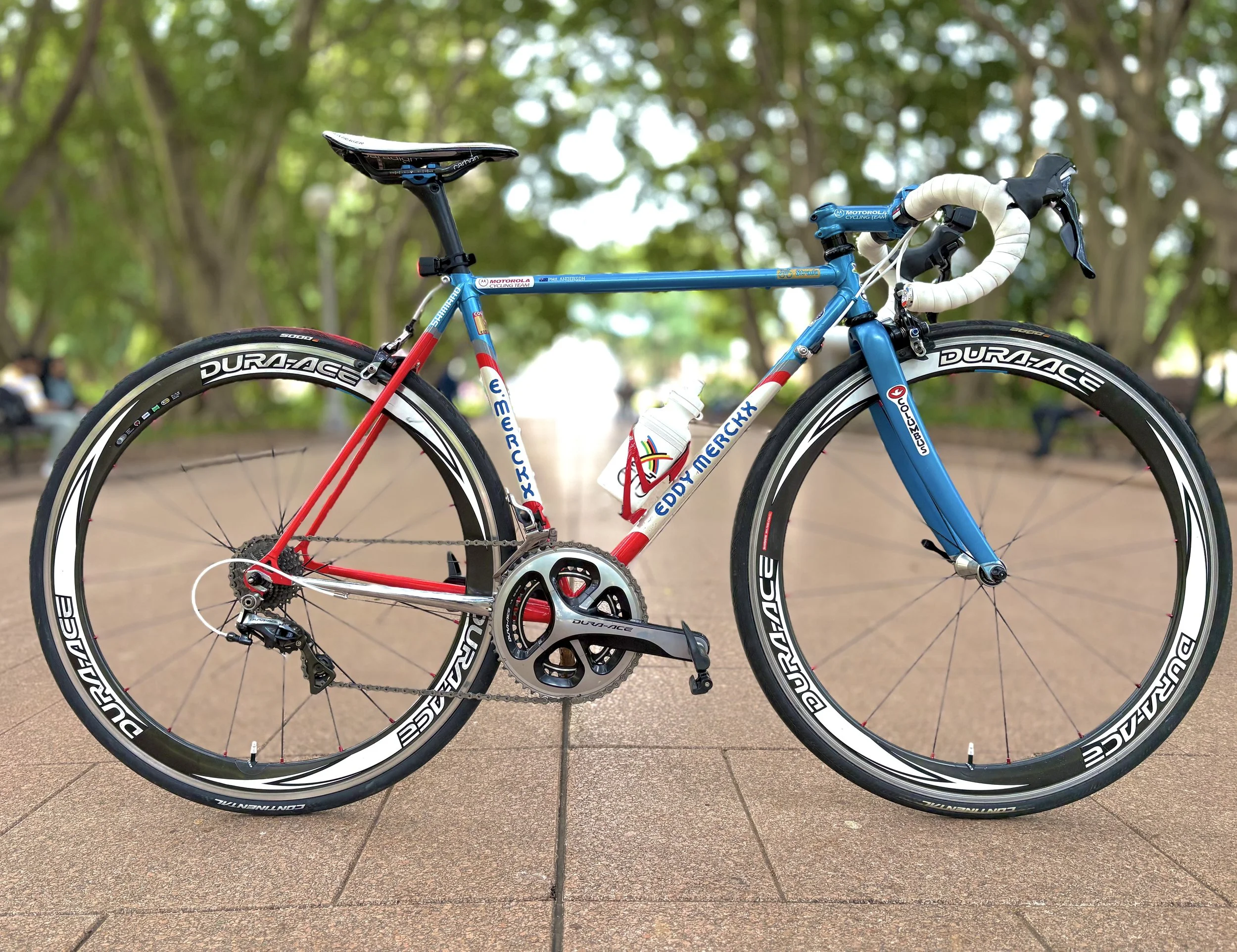
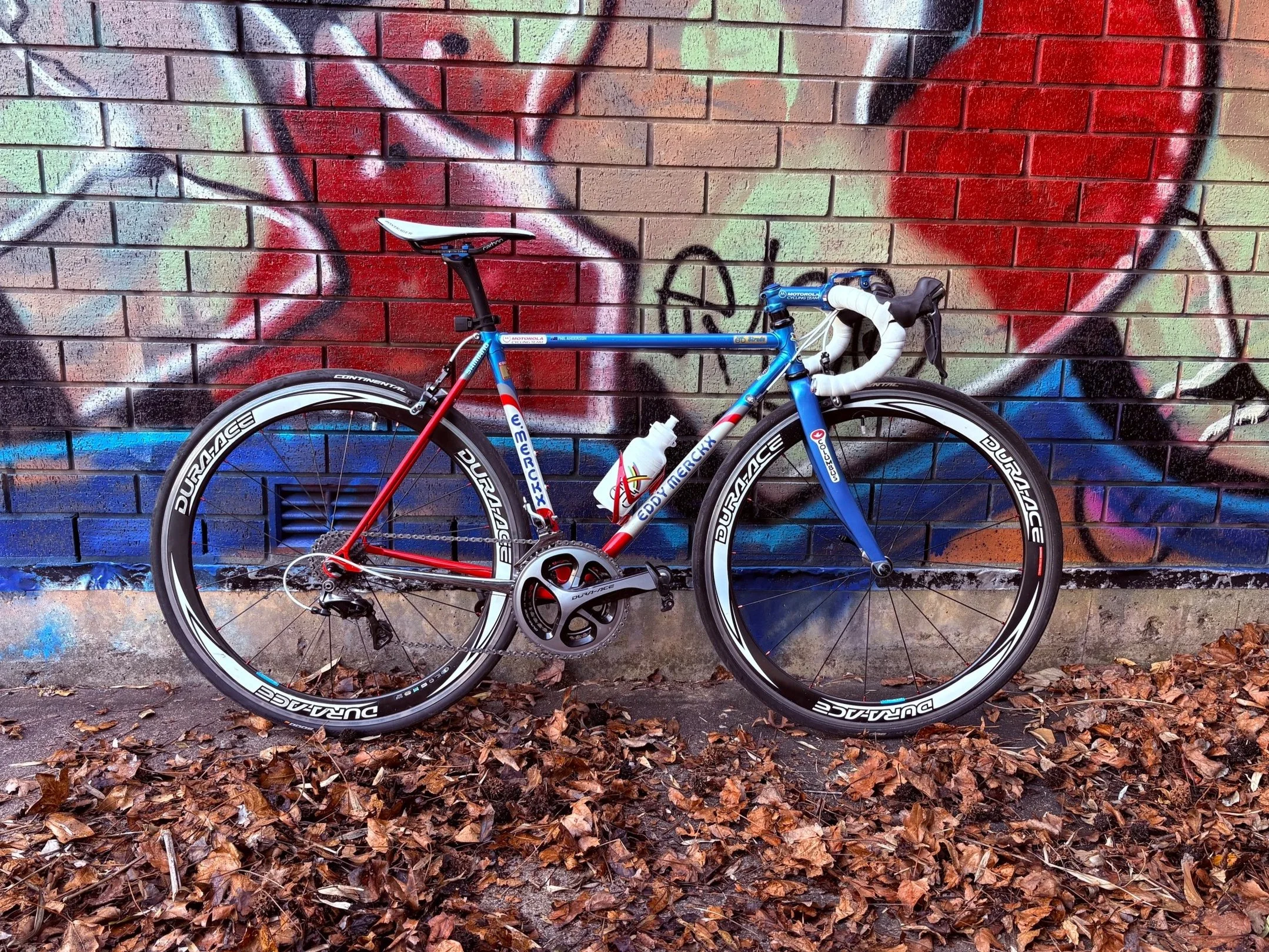
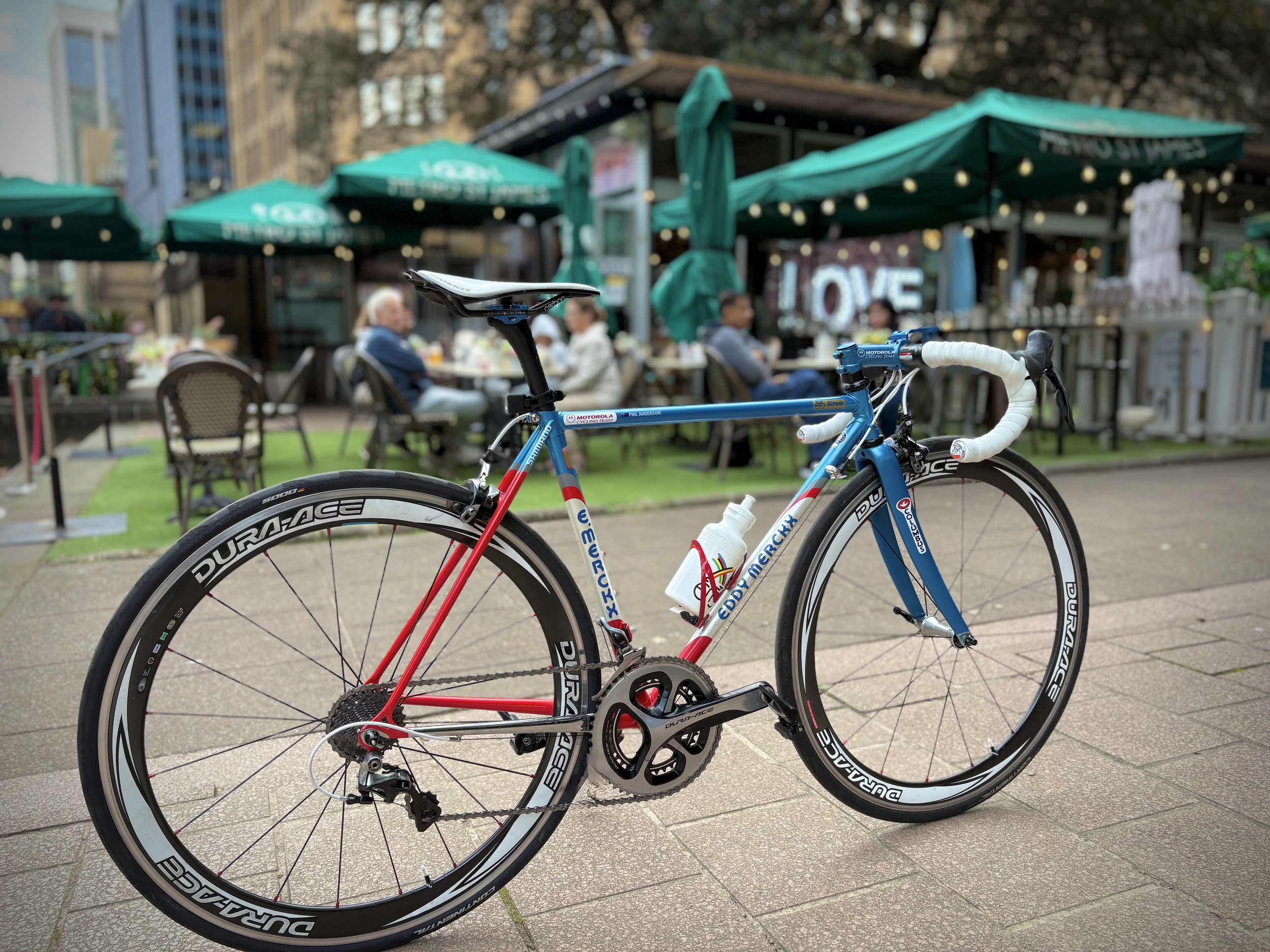
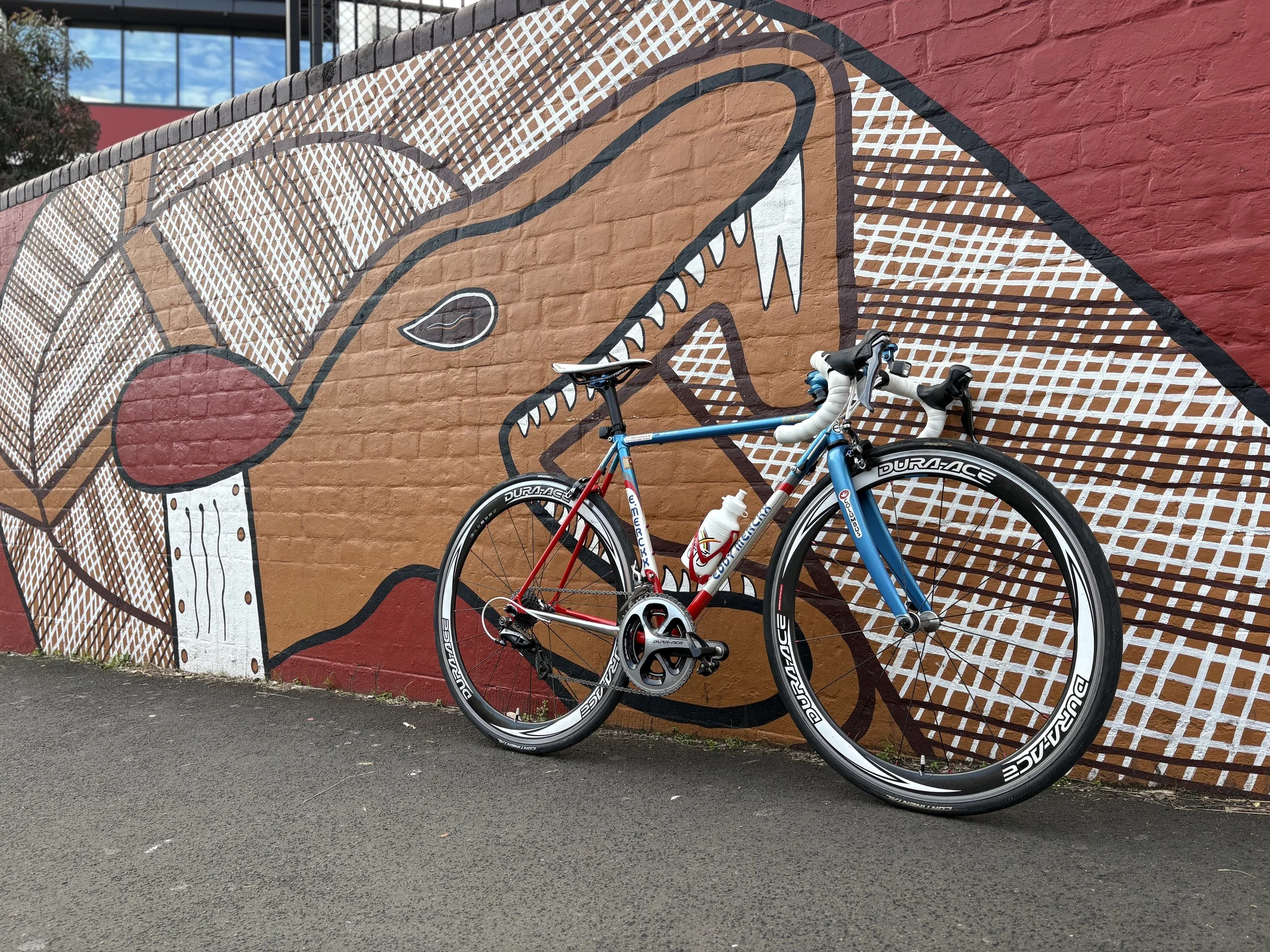
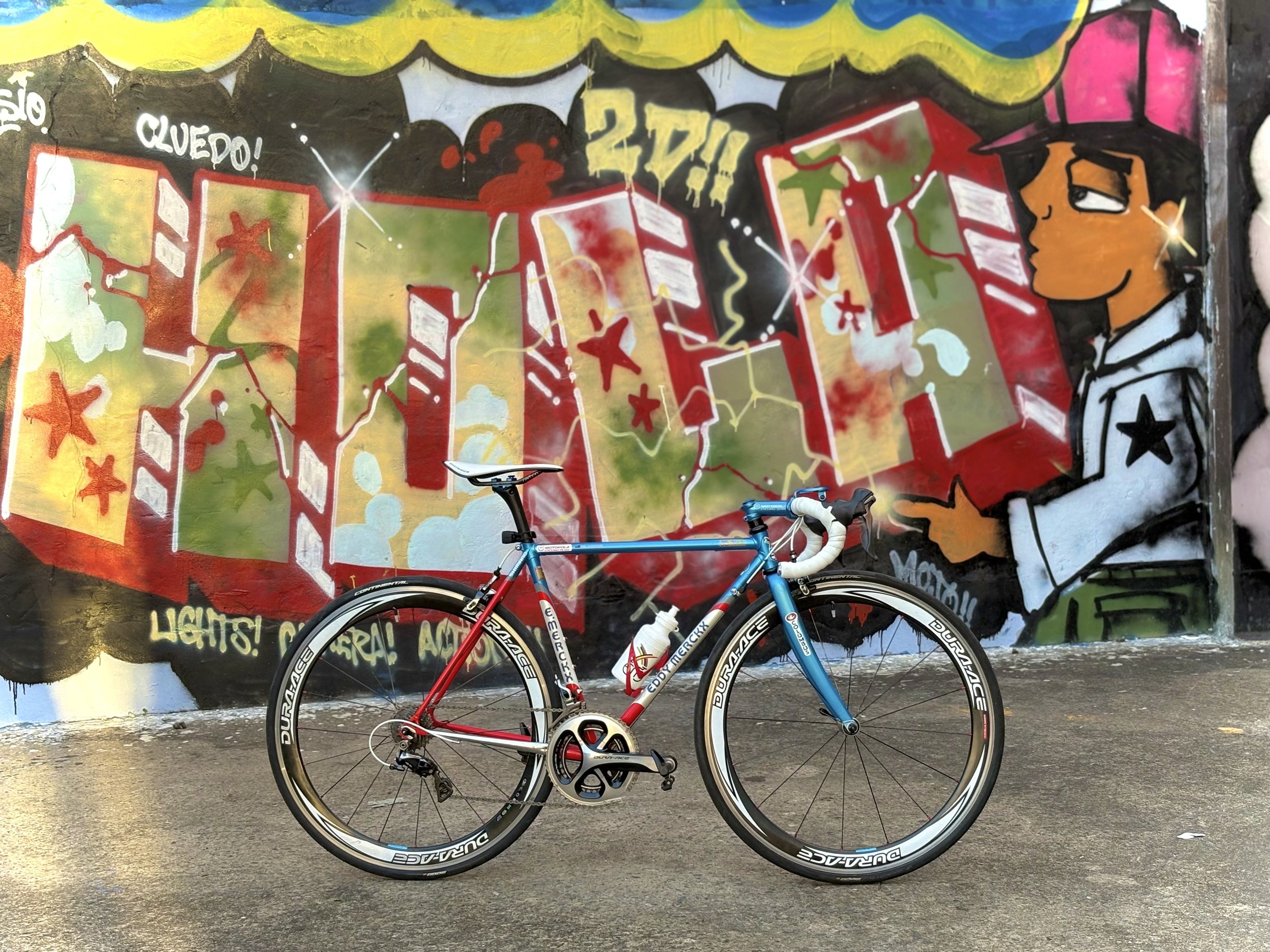
This Eddy Merckx Motorola tribute build is a celebration of this golden era of cycling. The frame is a genuine Eddy Merckx Strada, built with Columbus tubing and finished in the iconic Motorola livery.
This build is a modern tribute to the legendary Motorola team bikes, combining period aesthetics with performance upgrades. The frame is a genuine Eddy Merckx Strada OS, restored in the iconic Motorola livery with authentic decals sourced from Greg Softley. To keep the spirit of the early ’90s alive, I’ve used white bar tape and white cabling to match the original team styling.
Performance-wise, the bike features a full Shimano Dura-Ace 9000 groupset for smooth, crisp shifting, paired with a Dura-Ace 7800 C50 carbon wheelset—blending old-school race geometry with modern aerodynamics and stiffness. The cockpit includes carbon handlebars, a carbon seatpost, and a Bontrager saddle with carbon rails, delivering both lightweight comfort and a sleek finish. This is a rider’s bike, built to honour its heritage but refined for modern road performance—ready to roll, race, and inspire.
Motorola Cycling Team
The Motorola Cycling Team emerged as a dominant force in early 1990s professional cycling, taking over sponsorship from 7-Eleven in 1991. With its distinctive red, white, and blue jerseys and American roots, Motorola was one of the first teams to integrate new technology into race strategy—using two-way radios and early performance monitoring tools. The team competed in top-tier European races, including the Tour de France and Giro d’Italia, and was renowned for blending seasoned pros with rising American talent. It was also the first pro team of Lance Armstrong, who joined in 1992. However, among the international stars, one Australian legend shone especially bright.
The Eddy Merckx Motorola Team Bike
The Motorola team bikes were handcrafted by legendary Belgian frame builder Eddy Merckx, using Columbus SLX or TSX steel tubing—known for their distinctive spiral-reinforced butting that added strength and stiffness without excessive weight. These frames were built for all-day stage racing and brutal mountain climbs. The Motorola team bikes were typically finished in the striking team paint scheme—deep metallic blue with white panels and bold Motorola logos. They were fitted with premium componentry of the day: Campagnolo Record or Dura-Ace 7400 series drivetrains, Cinelli cockpits, and Mavic wheelsets. Each bike carried the Merckx racing pedigree—precision, speed, and a rider-first philosophy.
Specifications
Frame & Fork: Merckx Strada Columbus SL, weighing 7.6Kg.
Size: seat tube (c-t): 56 cm, top tube (c-c): 55.5 cm, headset tube: 13.5 cm, standover: 80.5 cm.
Bottom bracket, Crankset, Front & Rear Derailleur, Headset, Shifters, Brakes & Brake Levers, Hubs, Pedals are all Dura Ace 9000.
Handlebars Cinelli Mod Giro d’Italia.
Stem: Aluminium (100 mm).
Cassette: Dura Ace 11 peed 11-25 machined to fit 10 speed rims.
Rims: Dura Ace C50
Seat: Bontrager
Seatpost: Carbon
Tyres: Continental GP5000, 25mm
Handlebar Tape: Pro, White
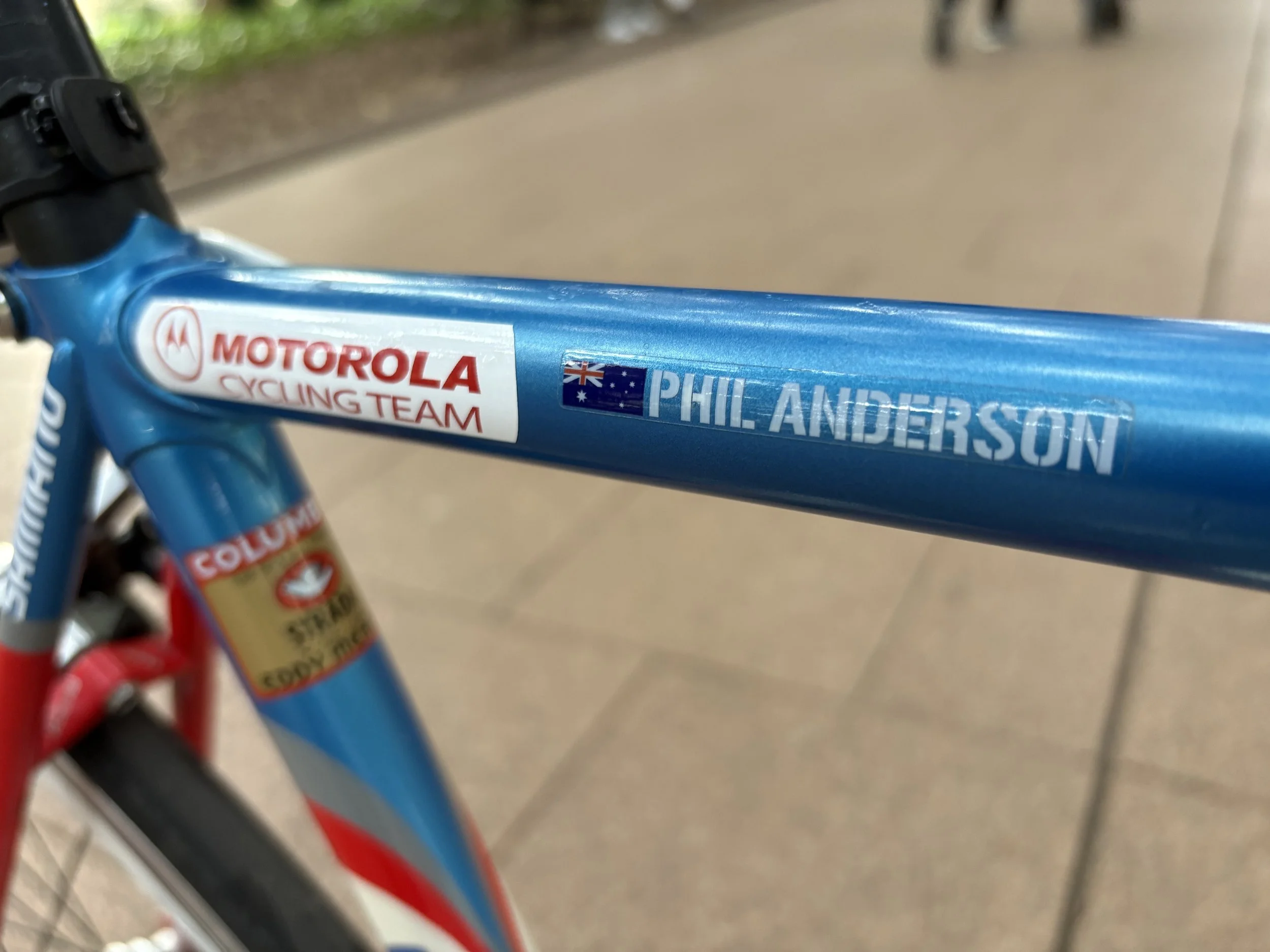
Phil Anderson: Australia’s Pioneer in the Peloton
Phil Anderson was a cornerstone of the Motorola team and a trailblazer for Australian cycling. Already a legend by the early ’90s, Anderson had been the first non-European to wear the yellow jersey in the Tour de France (1981) and had a long career in the European pro peloton. During his time with Motorola, Anderson brought experience and tactical intelligence, helping guide younger riders while still claiming impressive results of his own. Known for his resilience, sharp climbing, and aggressive style, he was respected throughout the peloton and continues to inspire generations of Aussie cyclists who followed in his footsteps.